
Creating a Data Miner Query
Use the Data Miner utility to build data access views with specific columns, selection criteria, and sort order. Queries are based on the files, columns, and rows you specify, so you can extract the customer, finance, equipment, parts, and marketing information you need for management-level decisions. After you create a query, you can save it for future use or modify it as needed. You can also upload the query to the Data Miner Repository to make it available to users at other dealerships.
To open the Data Miner screen, navigate to Management Central > Utilities > Data Miner. The Access to Data Miner switch must be activated in security system 505.
Topics in this section include:
See also:
-
Navigate to Management Central > Utilities > Data Miner. The Data Miner screen appears.
-
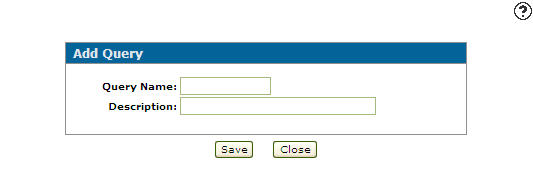
On the Data Miner screen, click Need to create a new query? Click here to add. The Add Query screen appears.
-
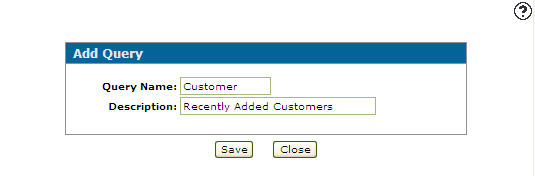
On the Add Query screen, enter a Query Name and a brief Description for the query.
-
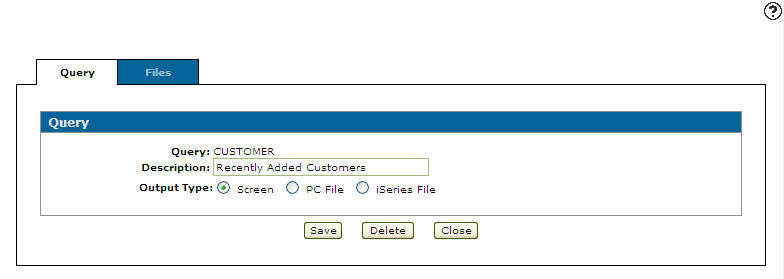
Click Save. The Query tab appears.
-
On the Query tab, you can edit the query Description.
-
Select the Output Type you want to use to generate the query:
-
Screen—displays the query output on screen.
-
PC File—sends the output to a designated PC file as a comma-separated, Microsoft Excel, Lotus 1-2-3 worksheet, or tab-delimited file.
-
iSeries File—sends the output to an iSeries file.
Note: When you use PC File output, the number of records downloaded is limited by the Maximum Data Miner Download Records setting on the IntelliDealer Settings screen.
-
-
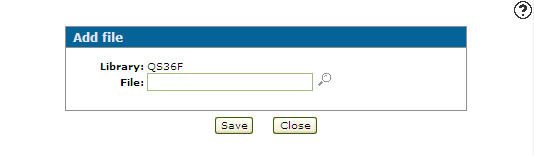
Click the Files tab. The Add File screen appears.
-
On the Add File screen, enter the data file from which the data is extracted in the File field.
- or -
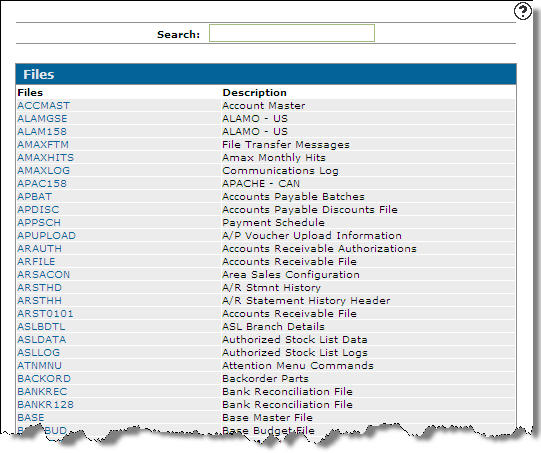
Click the Search
 icon and select a data file from the Files screen.
 -
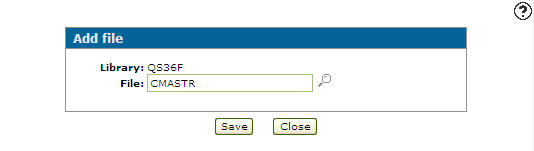
The Add File screen refreshes with the selected data file in the File field.
-
Click Save. The Files tab appears, and the Virtual Fields, Columns, Rows, Sort, and Authority tabs are unlocked.
-
(Optional) Click the Virtual Fields tab. The Virtual Fields tab appears, where you can add virtual fields to the query.
-
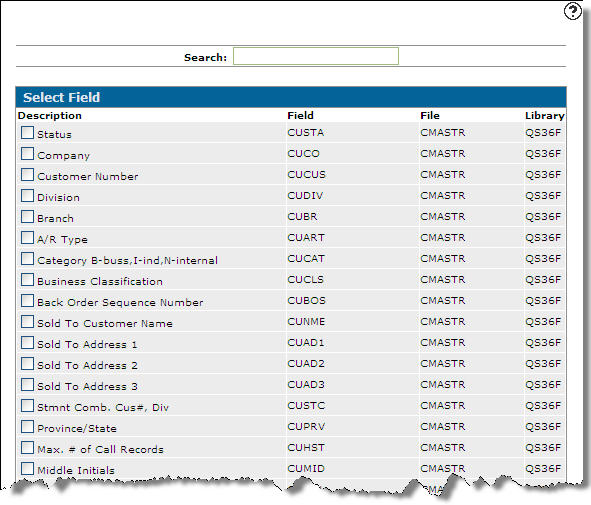
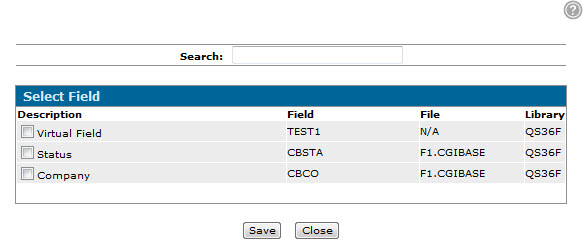
Click the Columns tab. The Select Field screen appears.
-
On the Select Field screen, select the check box next to each column you want to include in the query, then click Save.
-
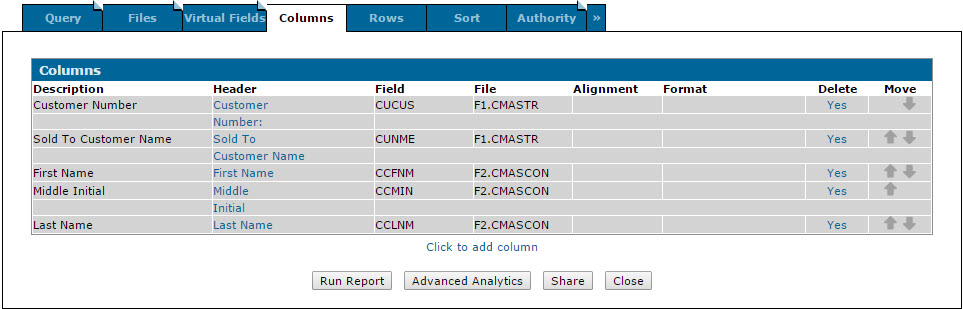
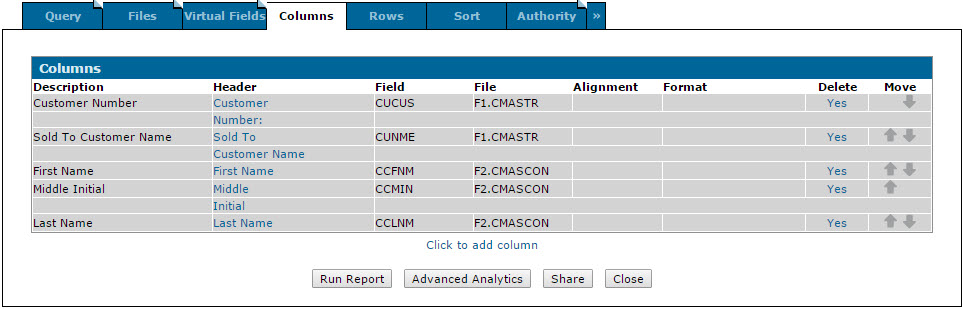
The Columns tab appears and displays the selected columns for the query.
-
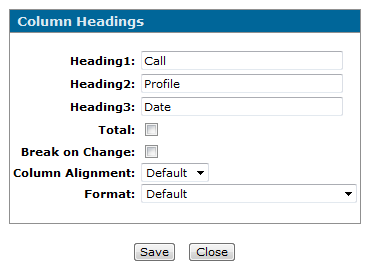
(Optional) On the Columns tab, click a column header to configure Column Alignment and Format. The Column Headings screen appears.
-
(Optional) On the Column Headings screen, select the desired Column Alignment and Format, then click Save. The Columns tab appears with the selected options.
Note: Certain Format options may not appear depending on the type of data in the column. For more information, see the Column Headings topic.
-
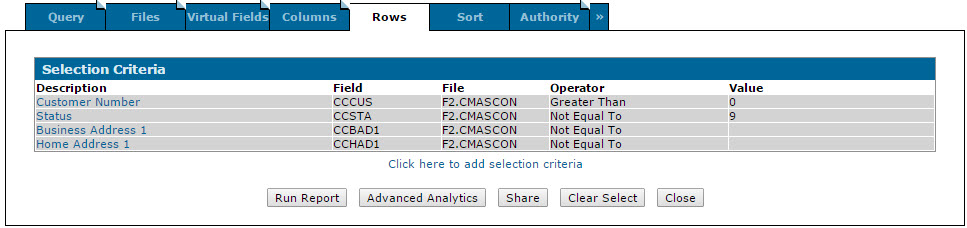
Click the Rows tab. The Selection Criteria tab appears.
-
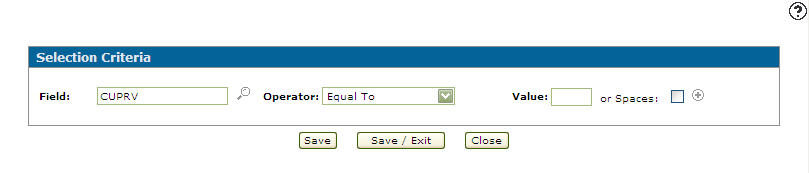
On the Selection Criteria tab, click Click here to add selection criteria. The Selection Criteria screen appears.
-
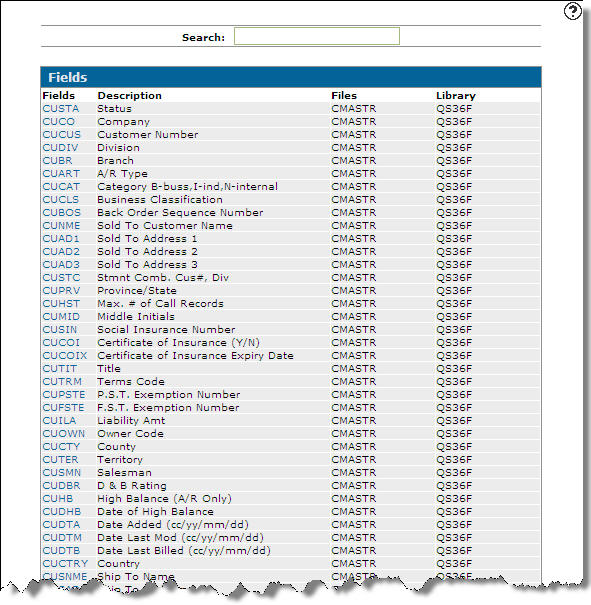
On the Selection Criteria screen, click the Search
icon next to the Field field. The Fields screen appears. -
On the Fields screen, enter a field name or description to search for a field. IntelliDealer filters the results as you enter each character. Click the desired Field name.
-
The Selection Criteria screen appears with the selected field.
-
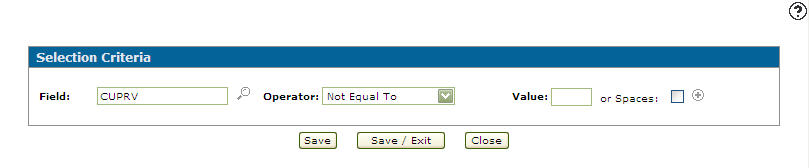
On the Selection Criteria screen, select an Operator from the drop-down list for the value you enter in the Value field.
-
Enter a Value.
-
Click Save and Close. The Selection Criteria tab appears and displays the selected rows.
-
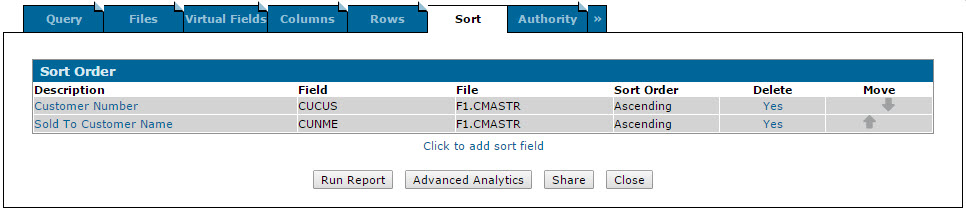
Click the Sort tab. The Select Field screen appears.
-
Select the check box next to each field you want to use to sort the query, then click Save. The Sort Order tab appears and lists the selected sort fields.
-
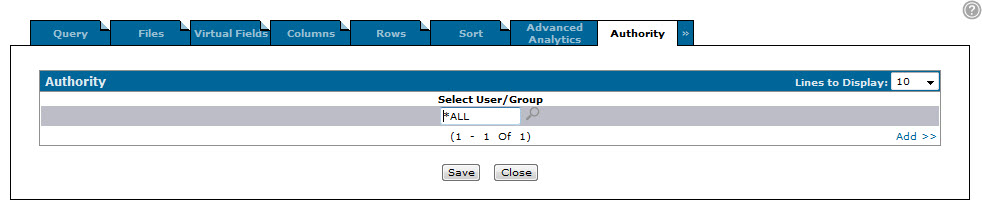
Click the Authority tab. The Authority tab appears.
-
On the Authority tab, select the users who are authorized to run the query.
Note: *ALL in the Select User/Group field indicates that all users and user groups are authorized to run the query.
-
Click the Add >> link to add users or user groups to the authorization list.
-
Click Save to save the user authorization list.
-
Click the Columns tab. The Columns tab appears.
-
On the Columns tab, click Run Report to run the query.
Note: The Run Report button is also available on the Sort tab and the Rows tab.
-
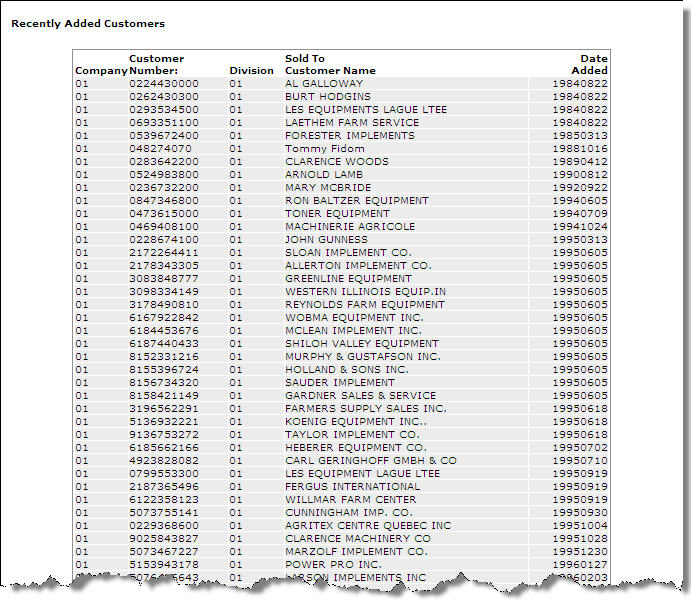
If you selected Screen for Output Type on the Query tab, a screen appears that displays the generated report.
-
(Optional) To upload the query to the Data Miner Repository, click Share on the Virtual Fields, Columns, Rows, or Sort tab of the query.
 Data Miner screen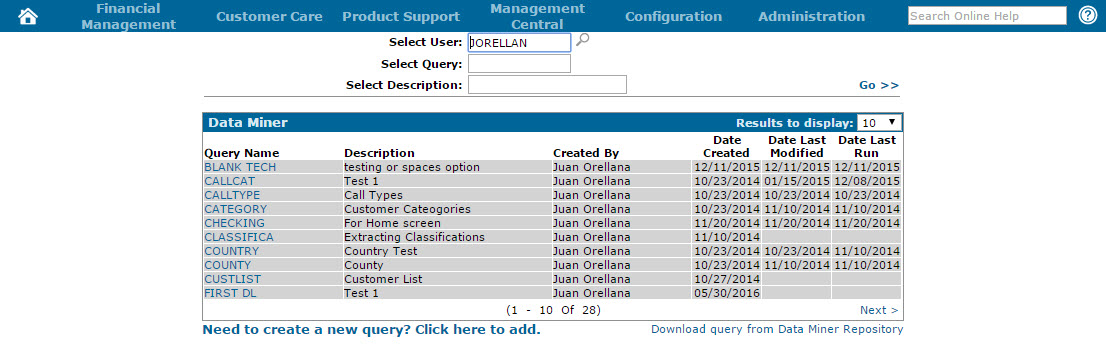




Best Practices
Follow these recommendations when you create Data Miner queries so reports run efficiently and do not affect other users at your dealership.
When you define selection criteria on the Rows tab, include as many key fields for the file as practical. Key fields allow IntelliDealer to access indexed data and run the query more efficiently. For example, when you report on the CMASTR (Customer Master Profile) file, include Company (CUCO), Customer Number (CUCUS), and Division (CUDIV) in your row selection when possible.
To identify key fields for a file, run Print File Descriptions at Configuration > Utilities > Print File Descriptions and review the Key column in the output. Values such as K01, K02, and K03 indicate the first, second, and third key fields for the file.
When you join files in a query, use the correct link fields between files. For guidance on linking to PFWTAB, see Linking to PFWTAB. For join types and file setup, see Files.
Inefficient queries can slow performance for other users at your dealership. If you use a hosted IntelliDealer environment, poorly designed queries can also affect other dealerships that share server resources.
Designate users who understand Data Miner to create and maintain queries. On the Authority tab, authorize other users to run queries without allowing them to change query definitions. Users who have access to Data Miner but do not have change authority must be listed on the Authority tab to run a query. For file-level security, see Data Miner Security.
Data Source: WEBQRYAL, WEBQRYC, WEBQRYF, WEBQRYH, WEBQRYR
Security: 505 - Management Central Utilities, Data Miner Security
Revision: 2026.09